

Quick Answer: Can a Seatbelt Injure You in a Car Accident?
Yes. Seatbelts are the single most effective safety device in a vehicle, but the same restraining force that prevents you from being ejected can also cause significant injuries when your body absorbs the impact of a collision. Seatbelt injuries range from surface bruising and soft tissue damage to broken ribs, internal organ injuries, and spinal trauma.
In Arizona, these injuries are fully compensable in a personal injury claim, meaning you can seek damages for medical bills, lost wages, and pain and suffering even when the seatbelt itself contributed to the harm. If you were injured in a car accident in Arizona and are dealing with seatbelt-related injuries, GLG Personal Injury Lawyers is here to help. Call (602) 922-7642 for a free consultation with an experienced Arizona car accident attorney.
Why Arizona Accident Victims Trust GLG Personal Injury Lawyers
Before we get into the medical and legal details, you deserve to know who you are dealing with. GLG Personal Injury Lawyers has recovered millions for injured clients across Arizona. Founding attorney Brendan Gallagher began his legal career as a Deputy County Attorney in Maricopa County, prosecuting serious felony cases in court before dedicating his practice entirely to representing injury victims. That prosecutorial background means he understands how cases are built, how evidence is challenged, and how to respond when insurance companies try to minimize the value of a seatbelt injury.
Our firm represents clients on a contingency fee basis, which means you pay nothing unless we recover compensation for you. Every case gets direct attorney attention, not a paralegal managing your file from a distance. We serve injury victims throughout Phoenix, Scottsdale, Mesa, Tempe, Chandler, Gilbert, Fountain Hills, and all of Arizona.
Trust factors that set GLG apart:
- millions recovered for Arizona injury victims
- Founded by a former Arizona Deputy County Attorney with courtroom trial experience
- Contingency fee representation — no fees unless we win your case
- Free consultations available by phone or in person
- Thousands of Arizona families have been represented since the firm’s founding
- Fully prepared to take cases to trial when insurance companies refuse to negotiate fairly
How Seatbelts Cause Injuries: The Physics of a Crash
To understand seatbelt injuries, it helps to understand what happens to your body during a collision. When a vehicle stops suddenly, your body continues moving forward at the speed the car was traveling before impact. The seatbelt, specifically the lap belt and diagonal shoulder strap, arrests that forward motion by applying force across your chest, abdomen, and pelvis.
In a moderate or severe crash, that restraining force can be enormous. The seatbelt distributes the energy across the parts of the body it contacts, but those contact points can sustain significant trauma in the process. The severity of the resulting injury depends on a number of factors:
- The speed of the vehicle at the time of impact
- The angle and direction of the collision
- The fit of the seatbelt on the occupant’s body
- Whether the seatbelt was properly buckled and positioned
- The occupant’s age, size, and physical condition
- Whether airbags were deployed and how they interacted with the belt’s restraining force
A properly worn seatbelt dramatically reduces the risk of death and catastrophic injury. But “reduces the risk” is not the same as “eliminates harm,” and the injuries that seatbelts cause are real, documented, and often serious enough to require surgery, extended rehabilitation, and long-term medical care.
Common Seatbelt Injuries After a Car Accident
Chest and Rib Injuries
The diagonal shoulder strap crosses directly over the sternum and ribs, making the chest one of the most commonly injured areas in seatbelt-related trauma. The force of impact can fracture ribs, bruise or crack the sternum, and cause deep soft tissue damage to the chest wall. Fractured ribs are particularly serious because they are painful, slow to heal, and can puncture a lung if the fracture is severe or if the victim does not rest adequately during recovery.
Symptoms that suggest chest injury after a crash include sharp pain when breathing, tenderness along the rib cage, difficulty taking a deep breath, and visible bruising across the chest in the pattern of the shoulder strap. These symptoms should never be dismissed as minor discomfort. A chest injury left undiagnosed can deteriorate rapidly.
Abdominal and Internal Organ Injuries
The lap belt portion of a seatbelt sits across the lower abdomen. In a frontal collision, the lap belt can compress the abdominal cavity with significant force, potentially injuring the intestines, colon, spleen, liver, kidneys, or bladder. These injuries are sometimes called seatbelt syndrome, a term used by trauma physicians to describe the cluster of abdominal injuries associated with lap belt restraint in high-force crashes.
Internal organ injuries are among the most dangerous seatbelt-related injuries because they do not always produce immediate, obvious symptoms. A lacerated spleen or bruised kidney may not cause severe pain until hours or even days after the accident, by which point the injury may have worsened significantly. Any abdominal tenderness, nausea, bloating, or pain following a car accident warrants immediate medical evaluation.
Shoulder, Collarbone, and Soft Tissue Injuries
The shoulder strap applies direct restraining force to the clavicle and shoulder joint, making clavicle fractures and shoulder soft tissue injuries common in moderate-to-severe crashes. The strap can also cause significant bruising, tearing of the muscles and tendons in the shoulder and upper chest, and nerve irritation along the path of the belt.
Soft tissue injuries caused by seatbelts including muscle tears, ligament strains, and bruising are frequently undervalued by insurance companies, who characterize them as minor. In reality, soft tissue injuries can cause chronic pain, limited range of motion, and long-term functional limitations that affect a person’s ability to work and perform daily activities.
Spinal and Neck Injuries
While the seatbelt itself primarily contacts the chest and abdomen, the forces it transmits through the body during a crash can cause significant spinal trauma, particularly in the cervical and lumbar spine. The rapid deceleration restrained by the belt creates flexion and extension forces throughout the spine, and in serious accidents can result in herniated discs, vertebral fractures, and nerve compression injuries.
Seatbelt-related spinal injuries are sometimes delayed in presentation, with pain and stiffness developing over days following the crash. This delay leads many accident victims to underestimate the severity of their injury and delay medical treatment a mistake that both worsens the physical outcome and complicates the legal claim.
Bruising and Skin Injuries
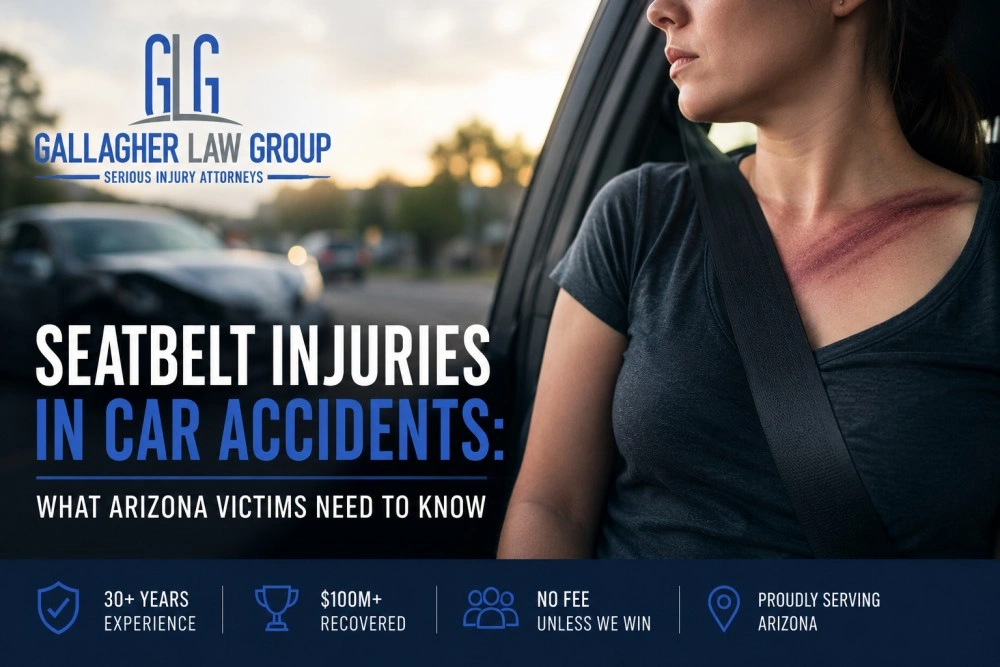
The most visible seatbelt injury is the bruise or abrasion that forms along the path of the belt — diagonally across the chest and along the waistline. While a bruise alone may seem minor, the presence of a seatbelt bruise pattern is actually a clinical indicator that significant force was applied to the underlying tissues and organs. Trauma physicians use seatbelt bruising as a diagnostic signal to investigate for deeper injuries that may not yet be symptomatic.
Pediatric Seatbelt Injuries
Children are at heightened risk for certain seatbelt-related injuries, particularly abdominal injuries from lap belts. Pediatric anatomy differs from adult anatomy in ways that make the intestines and lumbar spine especially vulnerable to lap belt compression.
Children who are seated in adult seat belts rather than age-appropriate car seats or booster seats face a significantly higher risk of injury. If a child was injured in a car accident involving seatbelt trauma, a separate legal claim may be available on their behalf.
Seatbelt Injury Symptoms You Should Never Ignore
Some seatbelt injuries are obvious at the scene of the accident. Others develop gradually over hours or days. The following symptoms warrant immediate medical attention following any car accident where seatbelt force was involved:
- Chest pain, especially pain that worsens when breathing deeply or coughing
- Abdominal pain, tenderness, or swelling in any area
- Nausea, vomiting, or dizziness not explained by head injury
- Visible bruising along the seatbelt line across the chest or abdomen
- Shoulder pain, weakness, or loss of range of motion
- Neck stiffness or radiating pain into the arms
- Back pain or pain that travels down the legs
- Difficulty urinating or blood in the urine
- Shortness of breath or a feeling that breathing is labored
The critical rule: do not wait to see if symptoms resolve on their own. Internal organ injuries can deteriorate within hours. A seatbelt bruise that looks minor on the surface may overlie a fractured rib or damaged spleen. Prompt medical evaluation protects your health and creates the documentation your legal claim will depend on.
How Seatbelt Injuries Affect Your Arizona Personal Injury Claim
Your Seatbelt Injuries Are Compensable
Arizona law allows injury victims to recover compensation for all damages caused by another driver’s negligence — including seatbelt injuries. The fact that the seatbelt caused or contributed to your injury does not reduce your claim against the at-fault driver. If their negligence caused the crash, they are responsible for the full scope of harm that resulted from it, including the injuries your seatbelt caused while doing its job.
Recoverable damages in a seatbelt injury case typically include:
- All past and future medical expenses, including emergency care, surgery, physical therapy, specialist treatment, and prescription medication
- Lost wages and diminished earning capacity if your injuries affected your ability to work
- Pain and suffering, including the physical pain and emotional distress caused by your injuries
- Loss of enjoyment of life if your injuries prevent activities you previously valued
- Property damage to your vehicle
What If You Were Not Wearing a Seatbelt?
This is one of the most common concerns we hear from potential clients. Arizona is a pure comparative negligence state, which means that your failure to wear a seatbelt can reduce your recovery but does not eliminate it entirely. However, Arizona also has a seatbelt defense statute (ARS § 28-909) that limits the extent to which an at-fault party can reduce a victim’s recovery for non-use of a seatbelt.
If you were not wearing a seatbelt at the time of the accident, you should still contact an attorney. The reduction in your recovery may be far smaller than you expect, and many factors influence how the seatbelt defense is applied in practice. Do not assume your case has no value without speaking with a lawyer first.
How Insurance Companies Handle Seatbelt Injury Claims
Insurance adjusters are trained to minimize payouts, and seatbelt injuries give them several tools to do so. They may argue that your injuries were minor because the seatbelt performed its intended function. They may attempt to characterize soft tissue damage as temporary and insignificant. They may dispute the causal link between the crash and your symptoms, particularly for injuries with delayed onset.
GLG Personal Injury Lawyers has seen every version of these tactics. Our team works with medical experts to document the full scope of seatbelt injuries, counter the insurance company’s characterization of your damages, and build a claim that reflects what your injuries have actually cost you now and in the future.
The Seatbelt Injury Case Results That Speak for Themselves
GLG Personal Injury Lawyers has recovered significant compensation for Arizona injury victims across all types of car accident cases. While past results do not guarantee future outcomes, these recoveries reflect our commitment to pursuing every dollar our clients are owed:
| Case Type | Amount Recovered |
| Truck Accident | $500,000 |
| Motorcycle Accident | $366,000 |
| Car Accident | $250,000 |
| Car Accident | $187,000 |
| Rear-End Car Accident | $88,000 |
| Rear-End Car Accident | $57,000 |
Every case is different, and the value of a seatbelt injury claim depends on the severity of your injuries, your medical expenses, your lost income, and the specific facts of the collision. The best way to understand what your claim may be worth is to speak with an attorney who has handled these cases.
What to Do After a Car Accident if You Think You Have a Seatbelt Injury
Taking the right steps immediately after an accident protects both your health and your legal claim.
Seek medical care right away, even if your symptoms seem manageable. Tell your treating physician exactly where you feel pain and describe the mechanism of injury, specifically that you were restrained by a seatbelt during a collision. This information will help your doctor look for seatbelt syndrome and other injuries consistent with belt restraint trauma.
Photograph the seatbelt bruise or marks on your body as soon as they appear, even if it is hours after the accident. This visual documentation can be powerful evidence of the force your body absorbed.
Keep all medical records, bills, and documentation of missed work. Do not give a recorded statement to the insurance company before speaking with an attorney. The way you describe your symptoms in those early conversations can limit your recovery later.
Contact GLG Personal Injury Lawyers as soon as possible. The sooner we get involved, the sooner we can secure evidence, preserve documentation, and build the strongest possible case on your behalf.
What Our Clients Say
“I had an accident that other attorneys wouldn’t take on, but I was lucky enough to find GLG Personal Injury Lawyers to take my case. My case recently settled and they were able to go above and beyond, to get me the best settlement that I deserved.” — Ramona Rab
“My attorney Brendan was patient to help me get the exact care we need. He never gave up and allowed me to get all the treatment and care I needed. The GLG Personal Injury Lawyers are amazing.” — Nathan Sumekh
“When no others would take my case GLG Personal Injury Lawyers extended their services. They are timely, professional and attentive to every detail.” — Danny Nunez
Serving Seatbelt Injury Victims Across Arizona
GLG Personal Injury Lawyers is based in Phoenix at 2600 N. 44th Street, Suite 107, Phoenix, AZ 85008, and represents car accident victims throughout the greater Phoenix metro area and all of Arizona, including Scottsdale, Mesa, Tempe, Chandler, Gilbert, Glendale, Fountain Hills, Paradise Valley, Peoria, Avondale, and beyond.
Call (602) 922-7642 or submit a contact form online to schedule your free, no-obligation consultation. There are no upfront fees. You owe nothing unless we recover compensation on your behalf.
Frequently Asked Questions: Seatbelt Injuries in Arizona Car Accidents
Can I file a personal injury claim for a seatbelt injury in Arizona?
Yes. If another driver’s negligence caused the accident, you can seek compensation for all injuries that resulted from the crash — including injuries caused by the seatbelt restraining your body during impact. The seatbelt’s role in causing your injury does not reduce the at-fault driver’s liability.
What is seatbelt syndrome?
Seatbelt syndrome is a clinical term used by trauma physicians to describe the pattern of abdominal and spinal injuries associated with lap belt restraint in high-force collisions. It typically involves injury to the intestines, colon, mesentery, or lumbar spine, and is often accompanied by a visible bruise across the lower abdomen in the pattern of the lap belt. Any suspected seatbelt syndrome should be evaluated with imaging in an emergency setting.
How long do seatbelt injuries take to show up?
Some seatbelt injuries — particularly soft tissue damage, internal organ bruising, and spinal injuries — may not produce obvious symptoms for hours or even days after the accident. This is why it is critical to seek medical attention after any significant collision even if you feel relatively fine at the scene. Delayed presentation does not mean a delayed claim is barred, but early documentation strengthens your case considerably.
Will my compensation be reduced if I was wearing a seatbelt and still got hurt?
No. The fact that you were wearing your seatbelt and were still injured does not reduce your claim. The seatbelt was doing its job — the at-fault driver is still responsible for the harm that resulted from their negligence.
Does Arizona have a seatbelt defense law?
Yes. Arizona Revised Statute § 28-909 addresses seatbelt use in civil litigation. Under this statute, evidence that a person was not wearing a seatbelt can be introduced in a civil case and may reduce the damages recoverable by the unbelted victim. However, the statute places limits on how this reduction is applied, and the comparative negligence framework still governs the overall allocation of fault. If you were not wearing a seatbelt, speak with an attorney before assuming your claim has no value.
What types of seatbelt injuries are most commonly seen in car accidents?
The most common seatbelt injuries include chest bruising and rib fractures from the shoulder strap, abdominal injuries and internal organ damage from the lap belt, shoulder and clavicle injuries, soft tissue damage throughout the upper body and abdomen, and spinal injuries caused by the forces transmitted through the restrained body during impact. In high-speed crashes, seatbelt injuries can be severe and require surgery and extended recovery.
How much is a seatbelt injury claim worth in Arizona?
The value of a seatbelt injury claim depends on the severity and permanence of your injuries, your total medical expenses including future care needs, the income you have lost or will lose due to your injuries, the degree of pain and suffering you have experienced, and the insurance coverage available from the at-fault driver. Cases involving internal organ damage, spinal injury, or fractures that require surgery tend to have higher settlement values. An attorney can evaluate your specific facts and give you a realistic picture of what your case may be worth.
Should I see a doctor even if my seatbelt injury seems minor?
Absolutely. A seatbelt bruise that looks superficial can overlie fractured ribs, a damaged spleen, or internal bleeding. Soft tissue injuries that feel manageable in the first day or two can develop into chronic pain conditions that affect your life for years. Seeing a doctor promptly protects your health, creates the medical documentation your claim needs, and prevents the insurance company from arguing that your injuries were not serious enough to warrant treatment.
How long do I have to file a personal injury claim in Arizona?
In most Arizona personal injury cases, you have two years from the date of the accident to file a claim. Missing this deadline typically bars you from recovering any compensation. Do not wait contact GLG Personal Injury Lawyers as soon as possible after your accident so we can protect your rights and begin building your case.