
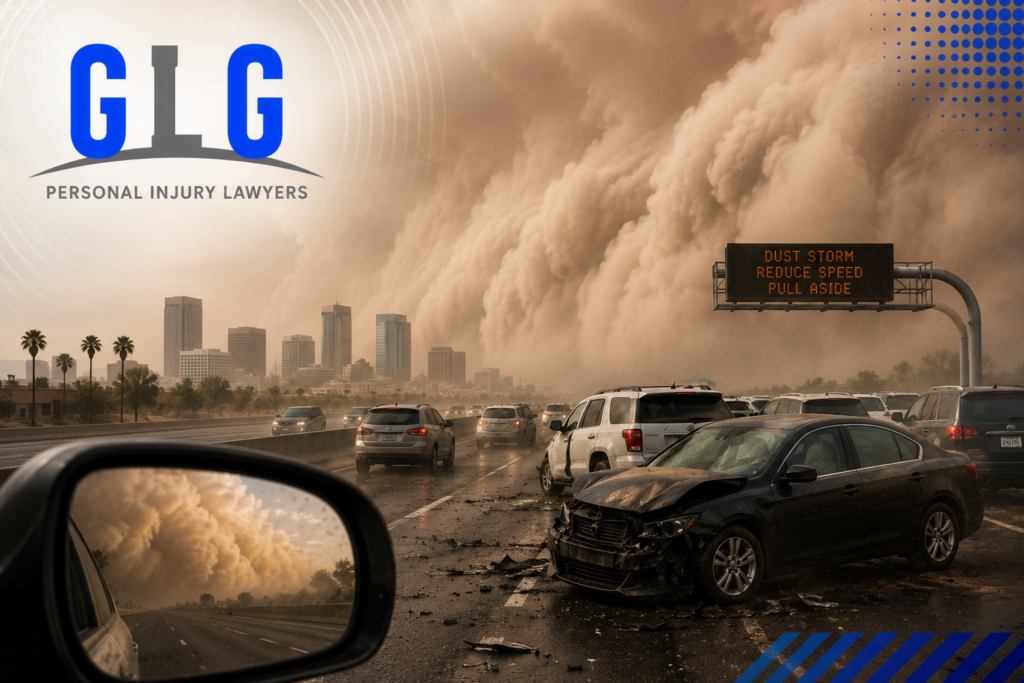
Arizona’s 2026 monsoon season is already producing the kind of dust storms Phoenix drivers dread. Haboobs have rolled through the Valley in recent days, cutting visibility to near zero on major corridors and creating exactly the conditions that lead to multi-vehicle pileups. If you’ve been in a crash during one of these storms, or you’re worried about driving through the rest of the monsoon season, one question matters most: who ends up responsible when the weather itself seems to be the cause?
The short answer is that dust storms do not erase driver responsibility. Insurance companies and courts still look at how each driver behaved once conditions turned dangerous, and that analysis can significantly affect who pays for your medical bills, vehicle damage, and lost income.
Weather Doesn’t Cancel Fault, It Complicates It
When a dust storm reduces visibility in seconds, it’s tempting to assume a resulting crash is just “an accident nobody could help.” In practice, Arizona law still requires drivers to operate reasonably given the conditions in front of them.
A driver who was speeding, tailgating, distracted, or who ignored posted weather warnings before the storm hit can still be found negligent, even though the dust storm was the trigger. Weather becomes part of the fact pattern insurance adjusters and attorneys examine, not an automatic excuse.
How Your Own Actions During the Storm Can Affect Your Claim
Arizona follows a pure comparative negligence rule, meaning your compensation can be reduced by your own percentage of fault in causing the crash. This matters a great deal in dust storm cases because the choices drivers make in those first few seconds of zero visibility are scrutinized closely.
If you kept driving through a wall of dust instead of pulling off the roadway, continued using your headlights while stopped on the shoulder (which can cause other drivers to steer toward your lights and rear-end you), or were following too closely before the storm hit, an insurance company may argue you share in the fault.
Understanding this rule before you give a statement to an adjuster is one of the most important things you can do to protect your claim.
Why Uninsured and Underinsured Motorist Coverage Matters More in Storm Season
Multi-vehicle dust storm pileups often involve several drivers, and it’s common for at least one of them to be uninsured or to carry only Arizona’s state minimum liability limits, which are often too low to cover serious injuries.
If you’re hit by an underinsured driver during a haboob-triggered chain-reaction crash, your own uninsured/underinsured motorist (UM/UIM) coverage may be the resource that actually pays for your medical care and lost wages. Reviewing your policy before the monsoon season peaks and understanding how UM/UIM claims work after a crash can make a real difference in what you’re able to recover.
What “Pull Aside, Stay Alive” Means for Liability
The Arizona Department of Transportation’s “Pull Aside, Stay Alive” campaign tells drivers to slow down, pull off the roadway as far as possible, turn off their lights, take their foot off the brake, and wait for a dust storm to pass.
This guidance exists because visible tail lights and brake lights in a dust cloud can draw other confused drivers toward a stopped vehicle, causing exactly the rear-end collisions that turn a single incident into a pileup. When fault is being sorted out after a crash, whether a driver followed or ignored this widely publicized guidance can become a meaningful piece of evidence.
Building the Evidence Trail in a Multi-Vehicle Storm Crash
Haboob-related pileups are notoriously difficult to sort out because so many vehicles may be involved and impacts can happen within seconds of each other. Strong claims are typically built on police reports, dashcam and traffic camera footage, National Weather Service data showing exactly when the storm reduced visibility in that area, witness statements, and accident reconstruction that establishes the sequence of impacts. The sooner this evidence is gathered, the harder it is for an insurance company to shift blame onto you.
What to Do If You’re Caught in a Dust Storm Crash This Monsoon Season
If you’re involved in a crash during a dust storm, get to safety and call 911 first. Seek medical attention even if your injuries seem minor, since adrenaline can mask pain after a sudden-impact crash. Take photos of the scene if it’s safe to do so, get contact and insurance information from every driver involved, and avoid speculating about fault with other drivers or adjusters at the scene.
Because these crashes often involve multiple vehicles and overlapping insurance claims, speaking with a Phoenix car accident attorney early can help ensure your account of what happened doesn’t get lost amid competing versions of events.
Frequently Asked Questions
Can I still recover compensation if the dust storm was the main cause of my crash?
Yes. Arizona’s comparative negligence rule allows you to recover compensation even if weather was a contributing factor, as long as another driver’s negligence played a role. Your recovery may be reduced if you’re also found partially at fault.
What if the other driver in my dust storm crash has no insurance?
This is exactly the situation uninsured/underinsured motorist coverage is designed for. If you carry UM/UIM coverage, it may cover your damages when the at-fault driver can’t.
How long do I have to file a claim after a crash during the monsoon season?
Arizona’s statute of limitations for most personal injury claims is two years from the date of the accident, the same as any other car accident claim.
Should I give a statement to the other driver’s insurance company right away?
It’s generally best to avoid detailed statements about fault until you’ve spoken with an attorney, especially in multi-vehicle storm crashes where liability can be complex and evolving.
Talk to a Phoenix Car Accident Attorney Before Monsoon Season Costs You
Monsoon season isn’t over, and Arizona’s dust storms will keep testing drivers on Valley highways for the next several weeks. If you’ve already been in a storm-related crash, or you want to understand your coverage before the next haboob rolls through, GLG Personal Injury Lawyers can review your situation at no cost. We work on a contingency fee basis, so you owe nothing unless we recover compensation for you.