


In most cases, you cannot sue your own insurance company simply because you were in a car accident. However, you can file a claim against your own insurer for uninsured or underinsured motorist benefits, and you can take legal action against them if they act in bad faith by wrongfully denying, delaying, or underpaying a valid claim. Arizona law requires insurance companies to deal with policyholders honestly and fairly.
Many drivers assume their own insurance company is automatically on their side. When a claim gets denied, delayed, or underpaid, that assumption can feel like a betrayal. A Phoenix car accident lawyer at our firm regularly hears from clients who are confused about whether they have any legal recourse against the very company they have paid premiums to for years. The answer depends on what your insurer did and which part of your policy is involved.
At GLG Personal Injury Lawyers, we have spent years helping Phoenix drivers navigate insurance companies that fail to honor their policies. We know how Arizona insurance law works, how claims adjusters are trained to respond, and what it takes to push back when a company is not acting in good faith.
When You Can File a Claim Against Your Own Insurer
There are three main situations in which your insurance company becomes a legal target after a car accident. Each one involves a different part of your policy and a different legal theory.
Uninsured Motorist Coverage
If the driver who hit you had no insurance at all, your uninsured motorist coverage steps in to pay for your injuries. This is technically a claim against your own policy, not a lawsuit against the other driver. Arizona requires insurers to offer this coverage, and most Phoenix drivers carry it.
Underinsured Motorist Coverage
When the at-fault driver has insurance, but their policy limits are too low to cover your medical bills and losses, your underinsured motorist coverage can make up the difference. This coverage often becomes relevant in serious crashes involving spinal injuries, fractures, or long-term treatment.
Bad Faith Insurance Practices
If your insurer breaks its promise to deal with your claim honestly, you may have a bad faith claim. This is a separate legal action from a standard injury claim and can include damages beyond what your policy would normally pay.
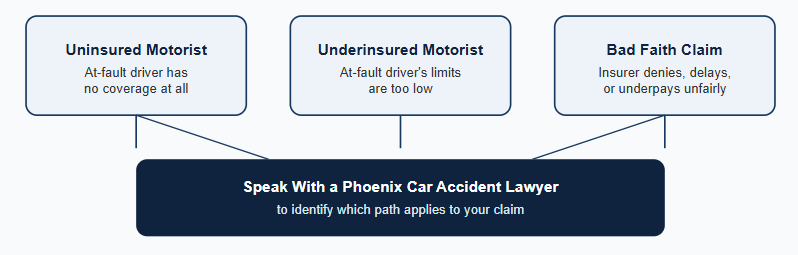
Three paths for pursuing a claim against your own insurance company after an Arizona car accident.
What Counts As Bad Faith in Arizona
Arizona law requires insurance companies to investigate claims fairly and pay what is owed within a reasonable time. When a company crosses the line from tough negotiation into bad faith, it exposes itself to legal liability. Common examples include the following.
- Denying a claim without a reasonable investigation
- Ignoring or delaying communication for weeks or months
- Offering a settlement far below the documented value of the claim
- Misrepresenting policy language to avoid paying benefits
- Requiring excessive or repetitive documentation to stall the process
Local Factors That Make These Claims Common in Phoenix
Phoenix has a high volume of daily traffic across the I-10, I-17, and Loop 101 corridors, and a meaningful share of drivers on the road carry minimal or no insurance coverage. That reality makes uninsured and underinsured motorist claims far more common here than in many other cities.
Common Situations We See in Maricopa County
Rear-end collisions on Phoenix freeways, hit-and-run crashes, and accidents involving out-of-state drivers passing through Arizona often lead directly to uninsured or underinsured motorist claims. In many of these cases, the injured driver is surprised to learn that their own policy, not the other driver’s insurance, becomes the primary source of recovery.
Steps to Take If Your Insurer Denies or Delays Your Claim
- Request a written explanation for the denial or delay
- Gather medical records, repair estimates, and correspondence in one file
- Avoid accepting a quick settlement before you understand the full cost of your injuries
- Track every phone call and email, including dates and names
- Speak with a Phoenix car accident lawyer before signing any release
Speak With a Phoenix Car Accident Lawyer About Your Options
If your own insurance company has denied, delayed, or lowballed your claim, you do not have to accept that outcome. Our team at GLG Personal Injury Lawyers works with Phoenix drivers to evaluate uninsured and underinsured motorist claims and potential bad-faith conduct.
Whether you are searching for a Phoenix, AZ auto accident attorney or simply trying to understand your policy, we are available for a free consultation to review what happened and explain your options in plain language.
Frequently Asked Questions
Can I sue my insurance company for denying my car accident claim?
You may be able to pursue a bad faith claim if your insurer denied your claim without a reasonable basis. This is separate from a standard injury claim and focuses on how the insurer handled the process. An attorney can review your denial letter and claim file to determine if bad faith applies.
What is the difference between uninsured and underinsured motorist coverage?
Uninsured motorist coverage applies when the at-fault driver has no insurance at all. Underinsured motorist coverage applies when the at-fault driver has insurance, but the policy limits are too low to cover your damages. Both coverages come from your own policy, not the other driver’s insurer.
How long does an uninsured motorist claim take in Arizona?
Timelines vary depending on the severity of the injury and how cooperative the insurance company is during the process. Straightforward claims can resolve in a few months, while claims involving serious injuries or disputed liability can take longer. A lawyer can help keep the process moving and respond to unnecessary delays.
Do I need a lawyer to file a claim against my own insurance company?
You are not required to hire a lawyer, but insurance companies often treat represented claims differently than unrepresented ones. An attorney can identify bad faith conduct that you might not recognize on your own. This is especially important when the insurer is disputing the value or validity of your claim.
What should I do if my insurance company offers a low settlement?
Do not accept the first offer if you are still receiving medical treatment or do not yet know the full extent of your injuries. Ask for a written explanation of how the offer was calculated. A Phoenix car wreck lawyer can compare the offer against your actual medical costs and lost income before you agree to anything.
Can a car accident lawyer help even if the crash was not my fault?
Yes. If the at-fault driver has no insurance or not enough coverage, your own policy becomes the source of recovery, and disputes with your own insurer can still require legal help. An attorney can manage communication with your insurance company and pursue every available avenue for compensation.