

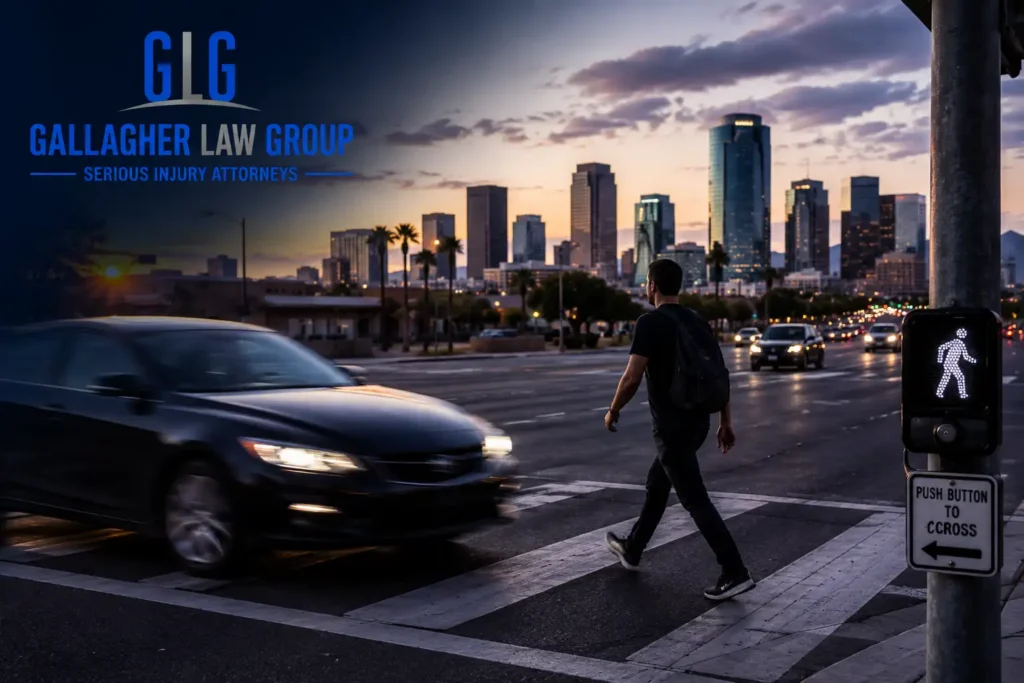
Quick Answer for Pedestrians in Phoenix
Phoenix has some of the most dangerous streets for walkers in the entire country. The intersections with the highest pedestrian crash rates are located along high-speed corridors including Indian School Road, Van Buren Street, McDowell Road, and Baseline Road. These crashes often result in severe injuries.
If you were struck by a vehicle, Arizona law may entitle you to compensation for medical bills, lost wages, and pain and suffering. Acting quickly matters because the state’s statute of limitations gives most injured pedestrians two years to file a civil claim.
About GLG Personal Injury Lawyers
GLG Personal Injury Lawyers is a Phoenix-based personal injury firm focused on fighting for injured Arizonans. Our pedestrian attorneys handle car versus pedestrian accident cases throughout the greater Phoenix metro area, including Tempe, Scottsdale, Mesa, Glendale, and Chandler.
We work on contingency, which means clients pay nothing unless we recover compensation on their behalf. Our team has handled serious injury and wrongful death cases involving pedestrians struck at crosswalks, in parking lots, and along high-speed roadways throughout Maricopa County.
Why Phoenix Is One of the Most Dangerous Cities for Pedestrians
Arizona consistently ranks among the most dangerous states for pedestrians in national safety reports. The combination of wide arterial roads, high posted speed limits, and gaps in sidewalk infrastructure creates hazardous conditions throughout the Phoenix metro area.
Phoenix is built around the car. Many corridors lack adequate lighting, raised crosswalks, or pedestrian refuge islands. Drivers traveling at 45 or 55 miles per hour have little time to react when a person enters the roadway.
The Arizona Department of Transportation records hundreds of pedestrian-involved crashes in Maricopa County every year. Many of these incidents occur at intersections that are already documented as high-risk locations.
The Intersections With the Highest Pedestrian Crash Rates in Phoenix
Van Buren Street Corridors
Van Buren Street runs east to west through central Phoenix and has a documented history of pedestrian fatalities. The stretch between 7th Avenue and 40th Street sees heavy traffic volume at all hours.
Many pedestrians in this area are traveling on foot because they lack access to personal vehicles. The combination of poverty, inadequate bus shelter infrastructure, and high vehicle speeds makes this corridor especially dangerous.
Indian School Road and 32nd Street Area
Indian School Road is a major east-west arterial with multiple lanes of fast-moving traffic. The area near 32nd Street is particularly hazardous because of the mix of commercial driveways, bus stops, and pedestrian crossings. Drivers exiting parking lots and commercial properties may fail to yield to pedestrians in crosswalks.
McDowell Road Between 7th Street and 16th Street
McDowell Road carries significant daily traffic through the midtown Phoenix corridor. This segment has limited pedestrian infrastructure and several high-speed intersections. Crashes here frequently involve pedestrians crossing mid-block or at uncontrolled locations.
Baseline Road Near South Mountain
Baseline Road runs along the southern edge of Phoenix and connects several residential communities to commercial areas. The posted speed limit along portions of Baseline reaches 45 miles per hour. Pedestrian crossing distances are long, and the wide roadway gives drivers little visual cue to slow down.
35th Avenue and Camelback Road
This north-south and east-west intersection sits in a high-density neighborhood on the west side of Phoenix. It serves a large population of pedestrians who rely on transit, including school-age children and elderly residents. The intersection has seen multiple serious crashes in recent years.
Common Causes of Car vs. Pedestrian Accidents at These Locations
Pedestrian crashes at dangerous Phoenix intersections share a pattern of contributing factors. Understanding these causes is important when building a personal injury claim.
- Drivers running red lights or failing to stop at crosswalks
- Speeding in areas with posted limits of 40 miles per hour or more
- Distracted driving, including cell phone use at intersections
- Failure to yield when turning left or right across a crosswalk
- Poor roadway lighting, especially during early morning and nighttime hours
- Inadequate pedestrian signal timing at wide intersections
Each of these factors can shift legal liability to the driver or, in some cases, to a government entity responsible for road design and maintenance.
What Arizona Law Says About Pedestrian Rights
Right-of-Way Rules in Arizona
Arizona law requires drivers to yield to pedestrians in marked crosswalks and at intersections with pedestrian control signals. However, pedestrians also carry responsibilities under state law. They are required to obey traffic signals and, in some situations, to yield to vehicles when crossing outside of a crosswalk.
This means fault in a pedestrian accident is not always clear-cut.
Comparative Fault and Your Claim
Arizona follows a pure comparative fault rule. If a pedestrian is found to be partially at fault for a crash, their compensation is reduced by their percentage of responsibility. A person who is 30% at fault, for example, may still recover 70% of their total damages.
This is why working with an experienced attorney matters. Insurance companies frequently try to assign fault to injured pedestrians in order to reduce or deny claims.
The Statute of Limitations
Most pedestrian accident claims in Arizona must be filed within two years of the date of the crash. Missing this deadline can permanently bar a victim from recovering compensation. There are exceptions for cases involving minors or government-owned vehicles, which carry shorter notice requirements.
Injuries Pedestrians Typically Sustain in High-Speed Crashes
A car versus pedestrian accident at 40 or 45 miles per hour can cause catastrophic injuries. The human body has no protection against the force of an impacting vehicle.
Commonly documented injuries in these cases include:
- Traumatic brain injury, including concussions and hemorrhages
- Spinal cord damage leading to partial or complete paralysis
- Fractures of the pelvis, legs, arms, and skull
- Internal organ damage requiring emergency surgery
- Severe road rash and soft tissue injuries
- Psychological trauma, including post-traumatic stress disorder
Many victims require months or years of medical treatment. Some injuries are permanent and affect a person’s ability to work and live independently.
What Compensation May Be Available After a Pedestrian Accident
Injured pedestrians may be entitled to several categories of financial recovery through a personal injury claim.
Economic damages cover measurable financial losses. These include emergency room bills, hospitalization, surgery, physical therapy, lost wages, and future medical expenses. Non-economic damages address the impact of the injury on a person’s quality of life, including pain, emotional distress, and loss of enjoyment of daily activities.
In cases involving gross negligence or intentional conduct, Arizona courts may also award punitive damages. These are designed to punish the at-fault driver and deter similar behavior.
How Our Attorneys Investigate a Pedestrian Crash in Phoenix
Building a strong claim after a pedestrian accident requires thorough investigation. Our team acts quickly to preserve evidence before it disappears.
We obtain police reports, crash reconstruction data, and witness statements. We review traffic camera footage and any available surveillance from nearby businesses. We document the physical conditions at the crash site, including crosswalk visibility, signage, and lighting.
When the roadway design itself contributed to the crash, we evaluate whether a government entity bears partial liability. These claims involve strict procedural requirements and short notice deadlines, which make early legal involvement essential.
Talk to a Phoenix Pedestrian Accident Attorney
If you or a family member was injured in a pedestrian accident in Phoenix, you have the right to understand your legal options. Our attorneys at GLG Personal Injury Lawyers handle cases involving all types of pedestrian and car crashes throughout Maricopa County.
Speaking with a Phoenix pedestrian accident lawyer shortly after a crash can protect your ability to recover damages. Evidence fades quickly, and insurance companies begin building their defense as soon as the incident is reported. If you need a pedestrian accident attorney in Phoenix, AZ, do not wait to get legal guidance.
Consultations are free, and there is no fee unless we recover compensation on your behalf.
Frequently Asked Questions
What Should I Do Immediately After Being Hit by a Car in Phoenix?
Call 911 and remain at the scene if you are physically able. Accept emergency medical care even if your injuries seem minor. Document the scene with photographs if possible. Get the driver’s name, insurance information, and vehicle details. Contact an attorney before speaking with any insurance adjuster. What you say in the hours after a crash can affect your claim significantly.
How Long Do I Have to File a Pedestrian Accident Lawsuit in Arizona?
In most cases, you have two years from the date of the crash to file a civil lawsuit in Arizona. Claims involving a government vehicle or a government-owned roadway may require written notice within 180 days of the incident. Missing these deadlines can result in losing your right to compensation entirely. Consulting an attorney early in the process helps ensure you do not miss critical filing windows.
What If the Driver Who Hit Me Did Not Have Insurance?
Arizona requires drivers to carry minimum liability insurance, but some drivers do not comply with this requirement. If you were struck by an uninsured or underinsured motorist, you may be able to pursue a claim through your own uninsured motorist coverage. In some cases, other parties such as a vehicle owner, employer, or government entity may also bear liability. An attorney can help identify all available sources of recovery.
Can I Still Recover Compensation If I Was Crossing Outside a Crosswalk?
Yes. Arizona’s comparative fault rules allow injured pedestrians to recover compensation even if they were partially at fault for the crash. The amount you receive will be reduced by your assigned percentage of fault, but you are not automatically barred from recovery. The specific facts of the crash, including driver speed, road conditions, and visibility, all factor into the fault analysis.
How Is Pain and Suffering Calculated in a Phoenix Pedestrian Accident Case?
Pain and suffering damages are not calculated using a fixed formula in Arizona. Attorneys and courts consider the severity and permanence of the injury, the impact on daily activities and relationships, the duration of recovery, and any ongoing limitations. Documentation from treating physicians, mental health providers, and personal journals can all support a pain and suffering claim. These damages are often the largest component of a serious pedestrian injury settlement.
We handle pedestrian accident cases on a contingency fee basis. This means there are no upfront costs and no hourly fees. Our attorneys only receive a fee if we successfully recover compensation on your behalf. The initial consultation is free and comes with no obligation to retain our services.