


Arizona law does not specify an exact age for when a child can legally sit in the front seat. However, safety experts strongly recommend that children under 13 years old ride in the back seat whenever possible. Front seat airbags can seriously injure younger children in a crash, especially in rear-end or front-impact collisions. Parents in Phoenix should follow both Arizona child restraint laws and national safety recommendations to reduce the risk of injury.
Understanding Arizona Child Passenger Safety Laws
Keeping children safe in vehicles is not just a recommendation. In Arizona, certain child restraint rules are legally required. Parents who fail to follow these laws may face fines and increased liability if an accident occurs.
Arizona Car Seat Requirements
Arizona law requires:
- Children under 5 years old are to be secured in an approved child restraint system
- Car seats to meet federal safety standards
- Proper installation and use according to the manufacturer’s instructions
These laws are designed to reduce serious injuries during crashes.
Booster Seat Recommendations
Although Arizona law does not specifically require booster seats after age 5, safety experts recommend booster seats until:
- A child reaches 4 feet 9 inches tall
- Adult seat belts fit properly across the chest and lap
Improper seat belt positioning can increase the risk of injury in an accident.
When Is It Safe for a Child to Sit in the Front Seat?
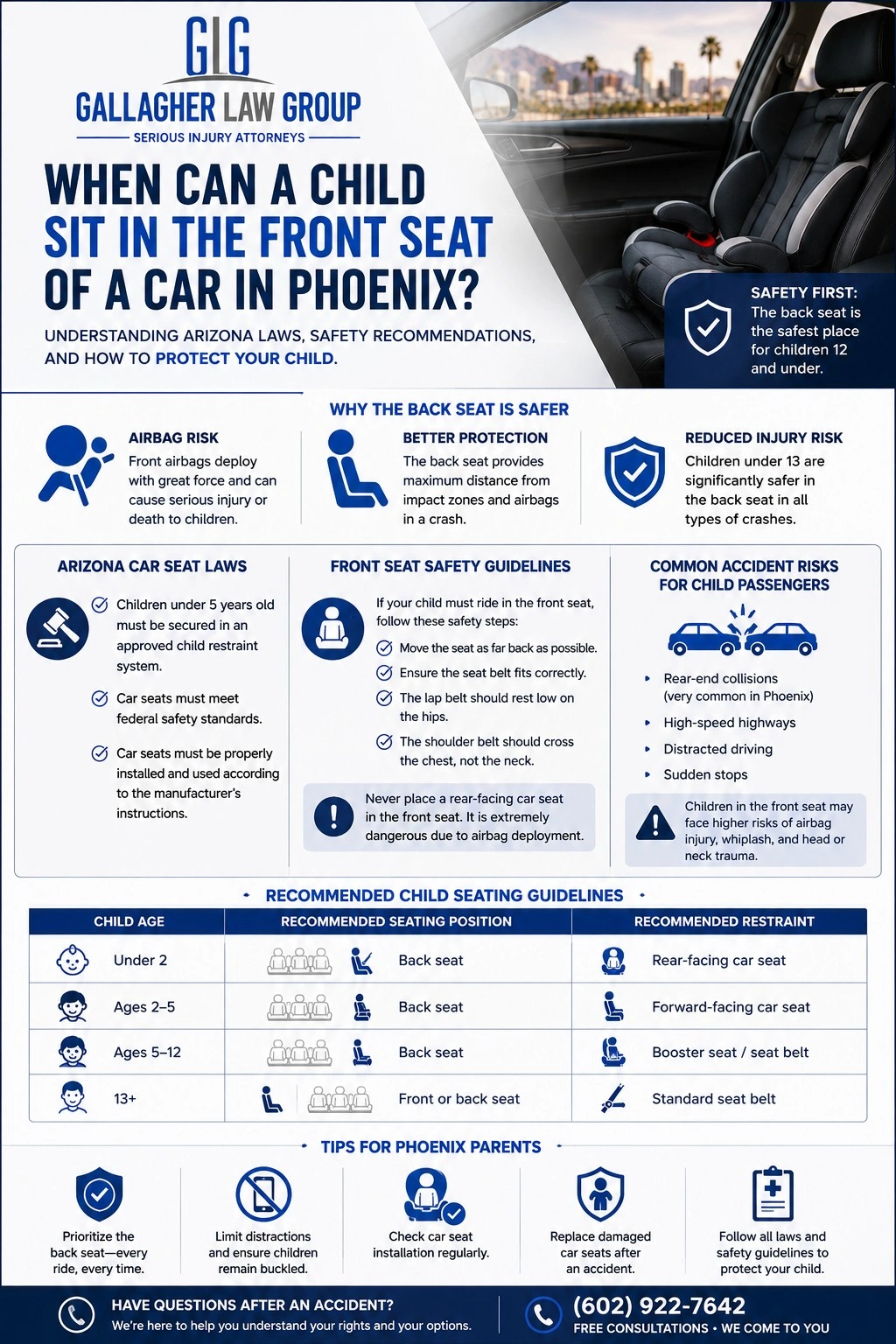
Recommended Age: 13 and Older
Organizations such as the Centers for Disease Control and Prevention (CDC) and the American Academy of Pediatrics recommend that children remain in the back seat until at least age 13.
Why?
Because younger children are more vulnerable to:
- Airbag-related injuries
- Head and neck trauma
- Chest injuries during collisions
The back seat provides significantly better protection during most types of crashes.
Why Front Seat Airbags Are Dangerous for Children
Airbags deploy with tremendous force. While they save adult lives, they can seriously harm children whose bodies are smaller and still developing.
Potential injuries include:
- Concussions
- Facial fractures
- Neck injuries
- Fatal trauma in severe crashes
This risk is especially high if a child:
- It is too small for the seat belt
- Leans forward while riding
- Is improperly restrained
Front Seat Safety Guidelines for Parents
If a child must ride in the front seat, parents should take extra precautions.
Important Safety Steps
Make sure:
- The seat is moved as far back as possible
- The child wears a seat belt correctly
- The lap belt rests low across the hips
- The shoulder belt crosses the chest, not the neck
Never Place Rear-Facing Car Seats in the Front
This is extremely dangerous due to airbag deployment. Rear-facing seats should always be placed in the back seat.
Common Accident Risks for Child Passengers in Phoenix
Phoenix roads can be especially dangerous due to:
- Heavy traffic congestion
- High-speed highways
- Distracted driving
- Rear-end collisions
Children sitting in the front seat may face increased injury risks in these types of accidents.
Rear-End Car Accidents and Child Injuries
Rear-end collisions are among the most common crashes in Arizona.
Children in front seats may experience:
- Whiplash injuries
- Airbag-related trauma
- Head injuries from dashboard impact
Even lower-speed crashes can cause serious harm to smaller passengers.
Chart: Recommended Child Seating Guidelines
| Child Age | Recommended Seating Position | Recommended Restraint |
| Under 2 | Back seat | Rear-facing car seat |
| Ages 2–5 | Back seat | Forward-facing car seat |
| Ages 5–12 | Back seat | Booster seat/seat belt |
| 13+ | Front or back seat | Standard seat belt |
Can Parents Be Held Liable for Child Passenger Injuries?
Yes. Parents or drivers who fail to restrain children properly may face legal and financial consequences after an accident.
This may include:
- Traffic citations
- Increased insurance liability
- Claims of negligence in injury lawsuits
Following safety guidelines can help protect both children and parents.
How Seat Belt Fit Affects Safety
Many children move to the front seat too early simply because they appear tall enough. However, proper seat belt fit matters more than age alone.
A seat belt fits correctly when:
- The lap belt sits across the upper thighs
- The shoulder belt crosses the center of the chest
- The child can sit back comfortably without slouching
If the belt rides across the stomach or neck, the child is not ready for adult seating.
Tips for Phoenix Parents Traveling With Children
Prioritize the Back Seat
Even if your child asks to sit in the front, the back seat remains the safest option.
Limit Distractions
Children moving around or removing their seat belts can increase the risk of injury.
Check Car Seat Installation
Improper installation is common and can reduce effectiveness during a crash.
Replace Damaged Car Seats
After certain accidents, child restraint systems may need to be replaced even if the damage is not visible.
What To Do After an Accident Involving a Child
If your child is involved in a car accident:
- Seek medical attention immediately
- Document injuries and vehicle damage
- Follow all recommended medical treatment
- Speak with an attorney if serious injuries occurred
Some injuries may not appear immediately after a crash.
Why Families Trust Experienced Injury Attorneys
Accidents involving children can become emotionally and financially overwhelming. Families often face:
- Medical bills
- Insurance disputes
- Long-term treatment needs
Experienced injury attorneys help families understand their legal options and protect their rights after serious crashes.
Frequently Asked Questions
Is it illegal for a child to sit in the front seat in Arizona?
Arizona law does not set a specific minimum age, but safety experts recommend waiting until age 13.
Can airbags hurt children?
Yes. Front airbags can cause serious injuries to younger children during crashes.
What is the safest place for a child in a car?
The back seat is considered the safest location for children under 13.
Does Arizona require booster seats?
Arizona law requires child restraints for children under age 5, but booster seats are strongly recommended until seat belts fit properly.
Can parents be ticketed for improper child restraints?
Yes. Drivers can face penalties for failing to secure child passengers properly.
Protecting Your Child Starts With Safe Driving Decisions
Understanding when a child can safely sit in the front seat is an important part of protecting your family on Phoenix roads. While Arizona law may not specify an exact age, following expert safety recommendations can significantly reduce the risk of serious injuries in an accident.
If your child has been injured in a car accident, speaking with GLG Personal Injury Lawyers can help you understand your legal rights and options moving forward.