

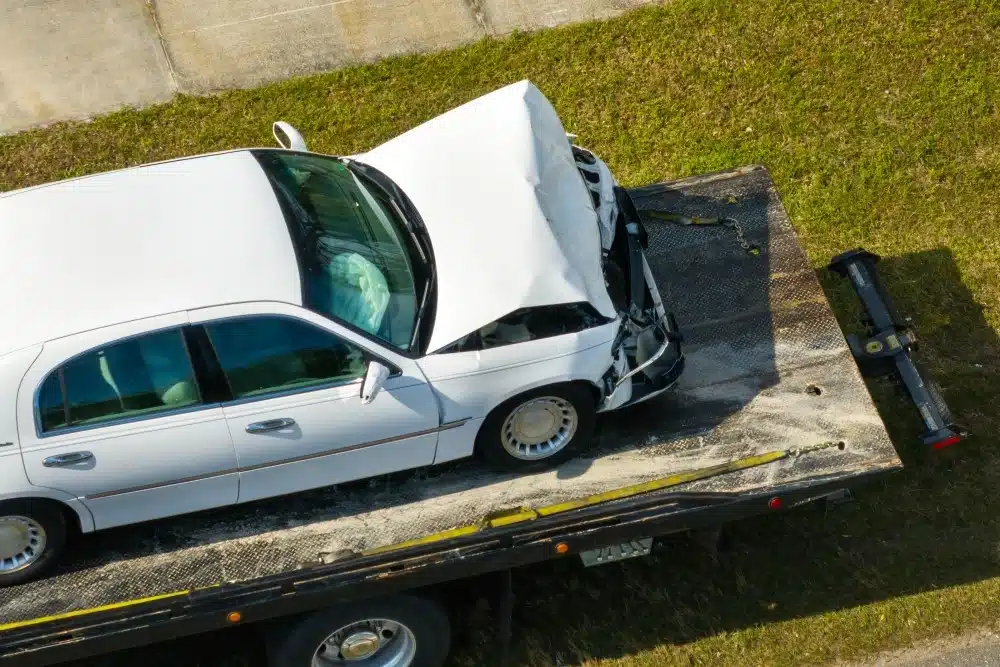
A diminished value claim in Arizona allows you to recover the loss in your vehicle’s value after an accident, even if it’s fully repaired. Arizona law recognizes that a repaired vehicle is still worth less than it was before the crash. These claims are typically made against the at-fault driver’s insurance, not your own. The challenge is proving how much value was lost and getting the insurance company to actually pay it. Most insurers undervalue or deny these claims unless they are backed by strong documentation and legal pressure.
GLG Personal Injury Lawyers understands the impact of these situations. Our Phoenix car accident lawyers are available to help answer your questions and provide insight into your case. Call for a risk-free consultation today.
What Is a Diminished Value Claim in Arizona?
After an accident, your car may be repaired, but it’s not the same.
Even with high-quality repairs, your vehicle now has an accident history. That history reduces what buyers are willing to pay. This loss in market value is called diminished value.
Arizona allows you to pursue compensation for that loss, but only under specific conditions.
You’re not being paid for the repairs. You’re being paid for the gap between what your car was worth before the crash and what it’s worth now.
That gap is often larger than people expect and often ignored by insurance companies unless it’s pursued correctly.
Arizona Diminished Value Law: What You Need to Know
Arizona is considered a “third-party diminished value” state.
That means you can pursue a diminished value claim against the at-fault driver’s insurance company, but not typically through your own policy.
To succeed, you need to show:
- Another driver caused the accident
- Your vehicle suffered a measurable loss in value
- That loss exists even after repairs
Insurance companies don’t automatically offer this. In most cases, you have to request it and prove it.
That’s where most claims stall.
How Diminished Value Is Calculated
There is no universal formula in Arizona.
Insurance companies often rely on internal models designed to minimize payouts, while independent appraisers may reach very different conclusions.
The value of your claim depends on several factors:
- The age and condition of your vehicle before the crash
- The severity and type of damage
- The quality of repairs completed
- The vehicle’s resale demand in the Phoenix market
Newer vehicles and higher-end cars typically experience greater diminished value, especially when structural damage is involved.
Example: How Diminished Value Works
| Scenario | Before Accident Value | After Repair Value | Diminished Value |
| Moderate Damage | $30,000 | $24,000 | $6,000 |
| Minor Damage | $20,000 | $17,500 | $2,500 |
| Severe Damage | $45,000 | $32,000 | $13,000 |
What matters isn’t just the repair cost it’s how the market perceives the vehicle afterward.
And that’s where insurance companies push back.
Why Insurance Companies Undervalue These Claims
Diminished value claims are among the most commonly underpaid areas in auto-related cases.
That’s not an accident.
Insurance companies know:
- Most drivers don’t know they can file these claims
- There’s no fixed formula, which gives them flexibility
- Many people won’t challenge a low offer
So they rely on internal calculations to minimize the payout.
If your claim isn’t backed by strong documentation or isn’t pushed, they often deny it outright or offer far less than it’s worth.
What Strengthens a Diminished Value Claim
A strong claim isn’t based on opinion; it’s based on evidence.
That includes:
- Independent vehicle appraisals
- Repair records and damage reports
- Market comparisons for similar vehicles in Phoenix
- Documentation of pre-accident condition
The difference between a denied claim and a paid one often comes down to how well this information is presented and whether the insurance company believes the claim will be pursued further if needed.
How These Claims Fit Into a Personal Injury Case
Diminished value is often part of a larger claim.
If you were injured in the accident, your case may include:
- Medical expenses
- Lost income
- Pain and suffering
- Property damage, including diminished value
Many people focus only on repairs and overlook the long-term financial impact of a vehicle’s declining value.
That’s money left on the table.
Why Experience Matters in Arizona Diminished Value Claims
These claims are rarely straightforward.
You’re dealing with an insurance company that has already decided what it wants to pay and built a process around paying less.
That’s why working with a Phoenix personal injury attorney can change the outcome.
At GLG Personal Injury Lawyers, cases are approached with a focus on maximizing total recovery, not just resolving the obvious parts of a claim.
That includes identifying often-overlooked losses, such as diminished value, and ensuring they are properly documented and pursued.
Insurance companies recognize when a claim is being handled thoroughly and when it isn’t.
That recognition affects how they respond.
Mistakes That Reduce or Eliminate Diminished Value Claims
Most diminished value claims don’t fail because they aren’t valid; they fail because they aren’t handled correctly.
One of the most common issues is waiting too long. Once repairs are completed and time passes, it becomes harder to establish the full extent of the loss.
Another mistake is relying entirely on the insurance company’s valuation. Their numbers are designed to protect their bottom line, not reflect true market loss.
Some people also assume diminished value is automatically included in a settlement. It usually isn’t. If it’s not specifically claimed, it’s often not paid.
And finally, trying to handle the claim alone can limit your ability to push back when the insurer disputes the value.
Why Clients Choose GLG Personal Injury Lawyers
In a competitive market like Phoenix, insurance companies see the same firms repeatedly.
They know which firms:
- Push cases further
- Build detailed claims
- Accept quick settlements
At GLG Personal Injury Lawyers, the focus is on building strong cases from the start and identifying every category of loss, not just the obvious ones.
That approach matters in diminished value claims, where the difference between a weak claim and a strong one can be thousands of dollars.
Clients benefit from a team that understands how insurers evaluate claims and how to position them for better outcomes.
What Your Diminished Value Claim Could Be Worth
There’s no flat number but in many cases, the loss is significant.
Even moderate damage can reduce a vehicle’s value by thousands of dollars, especially in Phoenix where resale markets are competitive and vehicle history reports heavily influence pricing.
The key is not just identifying that loss but proving it in a way the insurance company can’t easily dismiss.
Talk to a Phoenix Personal Injury Attorney About Your Claim
If your vehicle was damaged in an accident, the repairs are only part of the story.
The loss in value is real and it can be recovered.
At GLG Personal Injury Lawyers, you don’t pay unless your case is successful. More importantly, your claim is evaluated fully, including areas most people overlook.
If you’re dealing with a diminished value claim in Arizona, don’t assume the insurance company has accounted for everything.
Get a clear answer. Understand what your vehicle is actually worth now and what you may be entitled to recover.
FAQs
What is a diminished value claim in Arizona?
It’s a claim for the loss in your vehicle’s market value after an accident, even if repairs were completed.
Can I file a diminished value claim in Arizona?
Yes, typically against the at-fault driver’s insurance company, not your own.
How is diminished value calculated?
It depends on the vehicle, the severity of the damage, the repairs, and market demand. Independent appraisals are often needed.
Do insurance companies have to pay diminished value?
Not automatically. You must prove the loss and pursue the claim.
Is diminished value included in a settlement?
Not always. It usually must be specifically identified and negotiated.