


Arizona law requires motorcycle helmets only for riders and passengers under 18, so most adult riders may legally ride without one. Not wearing a helmet does not bar an injury claim against the driver who caused a crash. However, an insurer may argue that a helmet would have reduced head injuries, which can lower that portion of damages under Arizona’s comparative fault rules.
By Brendan Gallagher, Phoenix personal injury attorney, GLG Personal Injury Lawyers.
Arizona is one of the best states in the country to ride, from the Beeline Highway to the Apache Trail, and many riders take advantage of the state’s adult helmet choice. But after a crash, the helmet question almost always comes up. Insurance adjusters often raise it in the first conversation, sometimes suggesting the rider has no case. That is not how Arizona law works. This guide explains what the helmet law requires, how the helmet defense works, and what it means for your claim’s value.
What Arizona’s Motorcycle Helmet Law Requires
Arizona’s helmet rule is found in A.R.S. 28-964. It requires protective headgear for any motorcycle operator or passenger under 18. Riders 18 and older are not legally required to wear a helmet. The same statute requires every operator, regardless of age, to wear protective glasses, goggles, or a transparent face shield unless the motorcycle has a protective windscreen.
Rider | Helmet Required? | Eye Protection Required? |
|---|---|---|
Operator under 18 | Yes | Yes, unless the bike has a windscreen |
Passenger under 18 | Yes | Not required by statute |
Operator 18 or older | No | Yes, unless the bike has a windscreen |
Passenger 18 or older | No | Not required by statute |
Because adults have a legal right to ride without a helmet, choosing not to wear one is not a traffic violation and is not the kind of conduct that causes a crash. That distinction matters a great deal once a claim is filed.
Helmet Use and Motorcycle Deaths in Arizona
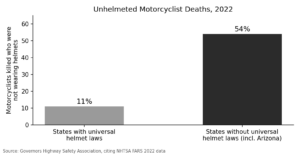
Helmet choice is still a safety issue with real consequences. Arizona recorded 228 motorcyclist deaths in 2022, a 36.5 percent jump from the year before, and among fatalities where helmet use was known, 42 percent involved riders or passengers without helmets. Nationally, states without universal helmet laws see a far higher share of unhelmeted riders among motorcycle deaths.
The most common crash causes in Arizona, however, have nothing to do with what the rider wears. Drivers turning left across a motorcyclist’s path, running red lights, and failing to check blind spots cause many of the most serious collisions. Those are the cases our Phoenix motorcycle accident lawyers see most often, including left-turn motorcycle crashes where the rider had the right of way.
Does Not Wearing a Helmet Hurt Your Injury Claim?
Not wearing a helmet does not stop you from filing a claim or recovering compensation. The driver who caused the crash is still responsible. Arizona follows a pure comparative fault system under A.R.S. 12-2505, which means your recovery is reduced by your percentage of fault but is never barred entirely, even if you share some responsibility. You can learn more about how comparative negligence works in Arizona.
The helmet issue comes in through damages, not liability. Arizona courts have long allowed defendants to argue that a person’s failure to use available safety equipment worsened their injuries. In Law v. Superior Court (1988), the Arizona Supreme Court allowed evidence of seat belt nonuse to be considered in reducing damages, and defense attorneys often make the same argument about motorcycle helmets.
How the Helmet Defense Actually Works
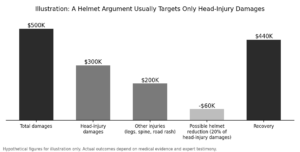
To reduce your recovery based on helmet nonuse, the defense generally has to prove that a helmet would have prevented or lessened a specific injury. That is a medical and biomechanical question, not an assumption. In practice, the defense usually needs expert testimony connecting the absence of a helmet to the particular injury.
This has several important consequences for injured riders:
- Injuries a helmet would not have prevented are generally unaffected. Broken legs, pelvic fractures, spinal cord injuries, internal injuries, and road rash are not caused by the lack of a helmet.
- Head injuries are where the dispute happens. Even then, some traumatic brain injuries occur despite a helmet, especially in high-speed or rotational impacts, and experts may disagree about whether a helmet would have changed the outcome.
- Any reduction is proportional. If a jury assigns a percentage of fault for not wearing a helmet, it typically applies to the damages a helmet would have affected, not your entire claim.
When Helmet Nonuse Can Matter More
Some situations give insurers a stronger argument. A rider under 18 who was not wearing a helmet was violating Arizona law, which can strengthen the defense on head-injury damages. Riders wearing novelty helmets that do not meet federal standards may also see arguments that the helmet provided little protection. In each case, the core question stays the same: what injuries would have been different, and by how much?
Other rider conduct can also come up under comparative fault, such as speeding or lane splitting outside what Arizona allows. Arizona permits lane filtering only between stopped vehicles at 15 mph or less, on roads with speed limits of 45 mph or lower. Claims involving speeding motorcycle accidents require careful analysis of the evidence on both sides.
How Insurers Use the Helmet Issue in Negotiations
Insurance adjusters often raise helmet nonuse early to make injured riders believe their claim is weak. Common tactics include suggesting the rider has no case, offering a low settlement before medical treatment is complete, or asking for a recorded statement focused on safety gear. You do not have to accept that framing. The driver’s insurer still has to answer for the driver’s negligence, and any helmet argument has to be supported by evidence.
What the Adjuster May Say | What Arizona Law Actually Says |
|---|---|
“You were not wearing a helmet, so you have no claim.” | Adults may legally ride without a helmet, and helmet nonuse does not bar a claim |
“Your injuries are your own fault.” | The at-fault driver remains responsible for causing the crash |
“We are reducing the whole claim.” | Any reduction generally applies only to injuries a helmet would have affected |
“Take this offer now.” | Settling before the full extent of injuries is known can leave you undercompensated |
What to Do After a Motorcycle Crash in Arizona
- Call 911, get medical care, and follow all treatment recommendations.
- Keep your helmet, gear, and motorcycle in their post-crash condition if possible, because damage patterns can be important evidence.
- Photograph the scene, the vehicles, your injuries, and road conditions.
- Collect names and contact information for the driver and any witnesses.
- Request the crash report. Here is how to get a police report for a car accident in Arizona, which applies to motorcycle crashes as well.
- Do not give a recorded statement to the other driver’s insurer until you have spoken with a lawyer.
If a damaged road or poor signage contributed to the crash, keep in mind that claims against a public entity require a notice of claim within 180 days. Many serious crashes also happen at the intersections highlighted in GLG’s Dangerous Intersections 2026 Report.
Brendan Gallagher on the Helmet Defense
“Almost every injured rider who calls us has already heard from an adjuster that not wearing a helmet killed their case. It did not. Arizona gives adults the right to make that choice, and the driver who turned in front of you is still responsible for the crash. If the insurance company wants to argue that a helmet would have changed your injuries, it has to prove that with medical evidence, and it usually affects only part of the case. We push back hard on that argument, because riders deserve to be compensated for every injury the driver caused.” Brendan Gallagher, GLG Personal Injury Lawyers
Hurt in a motorcycle crash and worried about the helmet question? GLG Personal Injury Lawyers represents injured riders throughout Phoenix and across Arizona, with offices serving Mesa, Scottsdale, Glendale, Tempe, Flagstaff, and more. We work on a contingency basis, so there is no fee unless we win. Call (602) 922-7642 or review our case results.
“I had an accident that other attorneys wouldn’t take on, but I was lucky enough to find GLG Personal Injury Lawyers to take my case.” Ramona Rab, client review
Frequently Asked Questions
Is it illegal to ride a motorcycle without a helmet in Arizona?
Not for adults. Under A.R.S. 28-964, Arizona requires helmets only for motorcycle operators and passengers under 18. Riders of any age must use protective glasses, goggles, or a face shield unless the motorcycle has a protective windshield.
Can I still file an injury claim if I was not wearing a helmet?
Yes. Not wearing a helmet does not cause a crash, and it does not take away your right to compensation from the driver who caused it. The insurer may argue that a helmet would have reduced certain injuries, but that argument generally affects only part of the damages, not your right to bring the claim.
Will not wearing a helmet reduce my settlement in Arizona?
It might, but only if the defense proves a helmet would have prevented or lessened a specific injury. Arizona uses pure comparative fault, so any reduction is proportional. Injuries that a helmet would not have protected, such as broken legs, spinal injuries, or road rash, are generally unaffected.
What if I am under 18 and was not wearing a helmet?
Riding without a helmet as a minor violates Arizona law, which can give the insurer a stronger argument on head-injury damages. It still does not shift fault for the crash itself to the minor, and the driver who caused the collision remains responsible. Claims involving minors also have special rules for deadlines and settlement approval.
Does a novelty helmet count as wearing a helmet?
For legal and insurance purposes, the helmet’s quality can matter. Insurers sometimes argue that a non-DOT-compliant helmet offered little protection. The key question remains whether a different helmet would actually have changed the injury, which usually requires expert analysis.
How long do I have to file a motorcycle accident claim in Arizona?
Generally, two years from the date of the crash under A.R.S. 12-542. Claims against a city, county, or the state require a notice of claim within 180 days, so road-defect cases have a much shorter deadline.
Is lane filtering legal in Arizona, and can it affect my claim?
Arizona allows lane filtering in limited situations: between stopped vehicles traveling in the same direction, at 15 mph or less, on roads with speed limits of 45 mph or lower and at least two lanes in the same direction. Filtering within those rules is lawful. Riding between lanes outside those conditions may be raised as comparative fault.
Concerns Riders Often Raise
“I feel like I should have worn a helmet, so maybe I should not file.” Your choice about a helmet did not cause the driver to hit you. Filing a claim simply holds the driver’s insurer responsible for the harm the driver caused, and any helmet-related arguments are handled within the claim.
“My injuries were mostly to my legs and back.” Then the helmet issue may have little or no effect on your case. Helmet arguments generally relate to head and facial injuries, not fractures, spinal injuries, or road rash.
“I cannot afford a lawyer.” GLG Personal Injury Lawyers handles motorcycle cases on a contingency basis. There are no upfront costs, and you pay nothing unless we recover compensation.
What Happens When You Call GLG Personal Injury Lawyers
When you call, our team will ask how the crash happened, where it occurred, what injuries you suffered, and what gear you were wearing. We will explain how Arizona’s helmet law and comparative fault rules apply to your situation, identify the evidence that needs to be preserved, and outline the next steps. You will come away with a clear understanding of your rights and what your claim may look like.
Talk to an Arizona Motorcycle Accident Lawyer
Arizona’s helmet law gives adult riders a choice, and that choice should not become an excuse for an insurance company to avoid paying for a driver’s negligence. Whether you were riding in Phoenix, Mesa, Scottsdale, or Tempe, our team is ready to help. Call (602) 922-7642 or contact us for a free consultation.