
Phoenix continues to rank among the busiest metro areas in the Southwest, and with that growth comes increased traffic congestion and serious collisions. For drivers, cyclists, and pedestrians, certain intersections consistently stand out as high-risk locations due to traffic volume, speed, and roadway design.
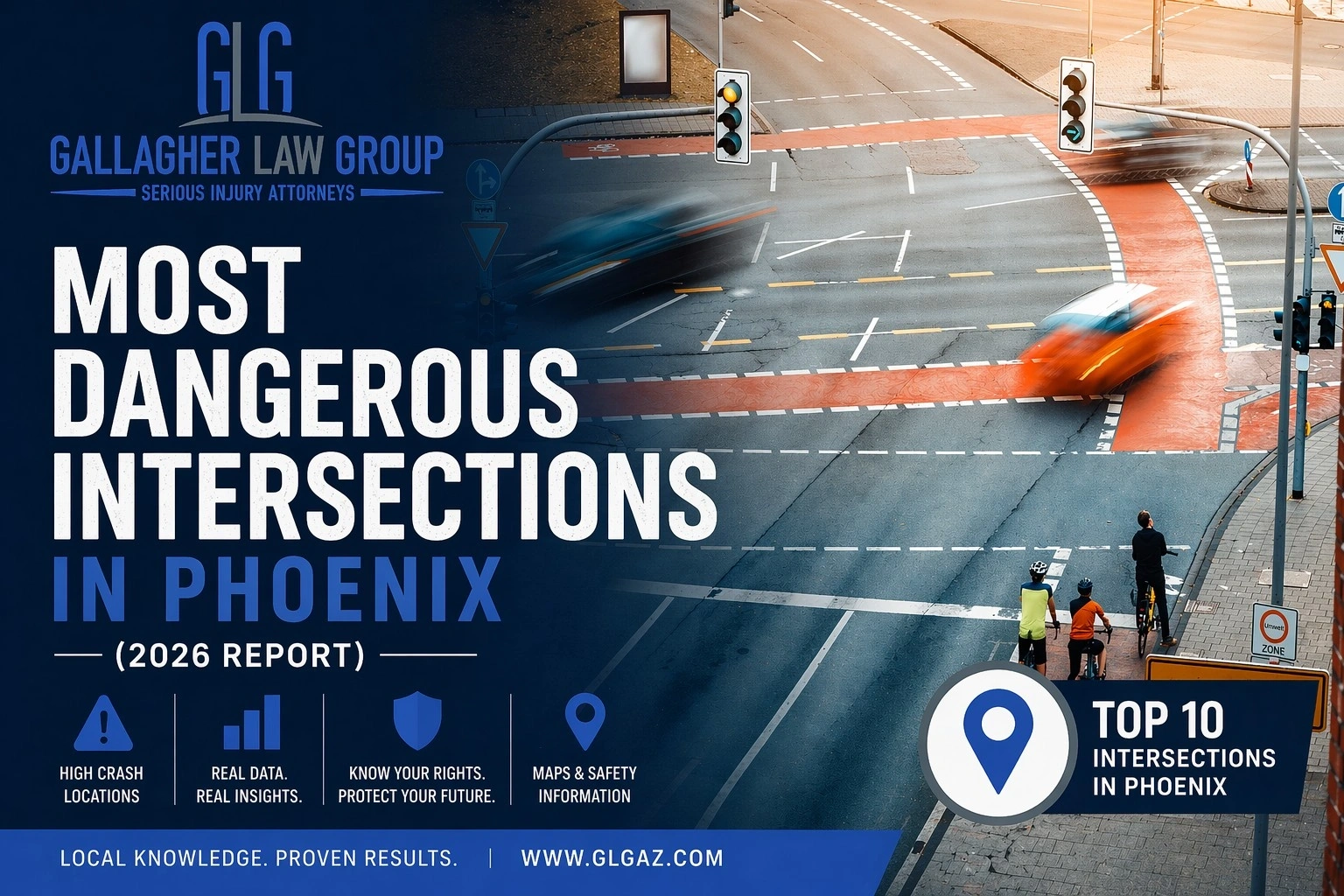
In this 2026 report, we break down the most dangerous intersections in Phoenix using the latest available data from the Arizona Department of Transportation (ADOT), Arizona Crash Facts reports, and local traffic safety studies. Understanding where accidents happen most often can help drivers stay alert and help injury victims understand how liability may be determined after a crash.
Phoenix Traffic Accident Overview
Phoenix sees tens of thousands of crashes each year. According to recent Arizona Crash Facts data:
- Over 120,000 total crashes occur annually statewide, with a large portion happening in urban areas like Phoenix
- Maricopa County accounts for more than 70% of all crashes, reflecting its population density and traffic volume
- Phoenix consistently leads Arizona cities in total collisions, especially at signalized intersections
- Speeding and red-light running remain leading causes, contributing heavily to severe and fatal intersection crashes
- Urban intersections account for a large percentage of injury-related accidents, particularly those involving multiple vehicles
- Distracted driving continues to rise, with mobile device use frequently cited in crash reports
- Pedestrian-involved crashes are more likely at busy intersections, especially near retail and transit corridors
Busy intersections combine multiple risk factors: high speeds, heavy traffic flow, frequent lane changes, and driver distraction. When these elements overlap, the likelihood of severe collisions increases significantly.
Most Dangerous Intersections in Phoenix (2026)
Based on crash frequency, injury rates, and historical trends, the following intersections are widely considered among the most dangerous in Phoenix:
1. 19th Avenue & Camelback Road
This intersection consistently ranks among the highest for crashes in Phoenix.
Why it’s dangerous:
- Heavy commuter traffic throughout the day and during rush hours
- Frequent left-turn conflicts due to high vehicle volume
- Significant pedestrian activity near shopping centers and transit stops
Common accidents:
- T-bone collisions from red-light violations
- Rear-end crashes caused by sudden stops and congestion
2. 35th Avenue & Bethany Home Road
A long-standing hotspot for serious injury collisions.
Key risk factors:
- High-speed traffic moving through a dense corridor
- Reduced visibility during peak traffic hours and at night
- Complex turning patterns that increase driver confusion
Crash trends:
- High rate of angle collisions involving multiple vehicles
- Frequent chain-reaction crashes during heavy traffic
3. 67th Avenue & Indian School Road
This West Phoenix intersection sees a significant number of injury accidents each year.
Why crashes happen here:
- Heavy cross traffic with limited gaps for safe turns
- Red-light violations and aggressive driving behavior
- Congested commercial zones are increasing stop-and-go traffic
4. 43rd Avenue & Glendale Avenue
Known for both vehicle and pedestrian-related accidents.
Primary concerns:
- High pedestrian volume crossing multiple lanes of traffic
- Drivers failing to yield at marked crosswalks
- Stop-and-go traffic patterns leading to rear-end collisions
5. 75th Avenue & Thomas Road
A major arterial intersection with consistent crash activity.
Contributing factors:
- Speeding vehicles traveling through wide lanes
- Large intersection layout increases crossing time
- Frequent lane changes near intersections and turn lanes
6. 51st Avenue & Indian School Road
Another intersection with a high collision frequency.
Common causes:
- Distracted driving and delayed reaction times
- Failure to yield during left turns or merging
- Improper turns and misjudged gaps in traffic
7. 27th Avenue & Indian School Road
This corridor has seen continued safety concerns over the years.
Why it ranks high:
- High traffic density during peak commuting hours
- Multiple access points to nearby businesses
- Aggressive driving behaviors, including speeding and abrupt lane changes
8. Central Avenue & McDowell Road
Located near downtown Phoenix, this intersection combines commuter and pedestrian traffic.
Risks include:
- Pedestrian accidents involving crosswalks and transit stops
- Light rail interaction adds complexity to traffic flow
- Dense urban congestion with frequent stops and starts
9. Bell Road & 35th Avenue
A major North Phoenix intersection with heavy daily traffic.
Key issues:
- High-speed traffic entering and exiting the intersection
- Sudden braking due to congestion and turning vehicles
- Rear-end collisions during peak travel times
10. Cave Creek Road & Cactus Road
A fast-moving intersection with a history of severe crashes.
Why it’s dangerous:
- Speeding vehicles with limited time to react
- Complex merging patterns and turning movements
- High traffic volume combined with inconsistent flow
Why These Intersections Are So Dangerous
Several consistent patterns emerge when analyzing Phoenix crash data:
High-Speed Urban Roads
Phoenix is known for its wide roads and higher speed limits than those of other major cities. This increases both crash frequency and severity, especially at intersections where vehicles cross paths.
Red-Light Running
Arizona reports show that intersection-related crashes are frequently caused by drivers running red lights, leading to dangerous side-impact collisions that often result in serious injuries.
Distracted Driving
With heavy commuter traffic, distraction from mobile devices, navigation systems, or passengers is a leading contributor to intersection accidents. Even a brief lapse in attention can result in a collision.
Rapid Population Growth
Phoenix’s expanding population has significantly increased traffic volume. In many areas, infrastructure improvements have not kept pace, leading to congestion and increased accident risk.
Pedestrian and Bicycle Traffic
Many high-risk intersections are located near shopping centers, schools, and transit stops, increasing the likelihood of pedestrian and bicycle-related accidents.
Most Common Types of Intersection Accidents
At dangerous Phoenix intersections, certain crash types occur more often:
- T-bone (side-impact) collisions, often caused by drivers running red lights or failing to yield
- Rear-end crashes, typically due to sudden stops, congestion, or distracted driving
- Left-turn accidents, when drivers misjudge the speed or distance of oncoming vehicles
- Pedestrian accidents, especially in areas with heavy foot traffic or limited crossing time
- Multi-vehicle collisions, where chain reactions occur in high-density traffic
These types of crashes often result in serious injuries, including head trauma, spinal injuries, fractures, and long-term medical complications.
What to Do After an Intersection Accident in Phoenix
If you are involved in a crash at a high-risk intersection, taking the right steps is critical:
- Call law enforcement immediately and request an official crash report for documentation
- Seek medical attention right away, even if injuries seem minor or symptoms are delayed
- Take detailed photos and videos of the scene, vehicles, traffic signals, and road conditions
- Collect names and contact information from witnesses and all involved parties
- Avoid admitting fault or making statements that could be misinterpreted later
- Keep records of medical treatment, expenses, and time missed from work
- Speak with a personal injury attorney before giving statements to insurance companies
These actions can protect both your health and your legal rights while strengthening any potential claim.
How Liability Is Determined in Intersection Crashes
Intersection accidents often involve disputes over fault. Common legal issues include who had the right-of-way, whether a driver ran a red light, the speed and behavior of each driver before impact, and whether traffic signals were functioning properly.
Arizona follows a pure comparative negligence rule, meaning multiple parties can share fault. Even if you are partially responsible, you may still recover compensation, though your percentage of fault will reduce your recovery.
How GLG Personal Injury Lawyers Can Help
Accidents at dangerous intersections often lead to complex claims involving multiple drivers, conflicting witness statements, and aggressive insurance companies. Having the right legal representation can make a significant difference.
At GLG Personal Injury Lawyers, we investigate crash scenes, gather critical evidence, work with accident reconstruction experts, handle all communication with insurance companies, and fight for full compensation for medical bills, lost wages, and pain and suffering.
Our team understands the unique traffic patterns and legal landscape in Phoenix, giving clients a strategic advantage when pursuing a claim. As a trusted Arizona personal injury law firm, we are committed to protecting the rights of accident victims and helping them move forward after serious injuries.